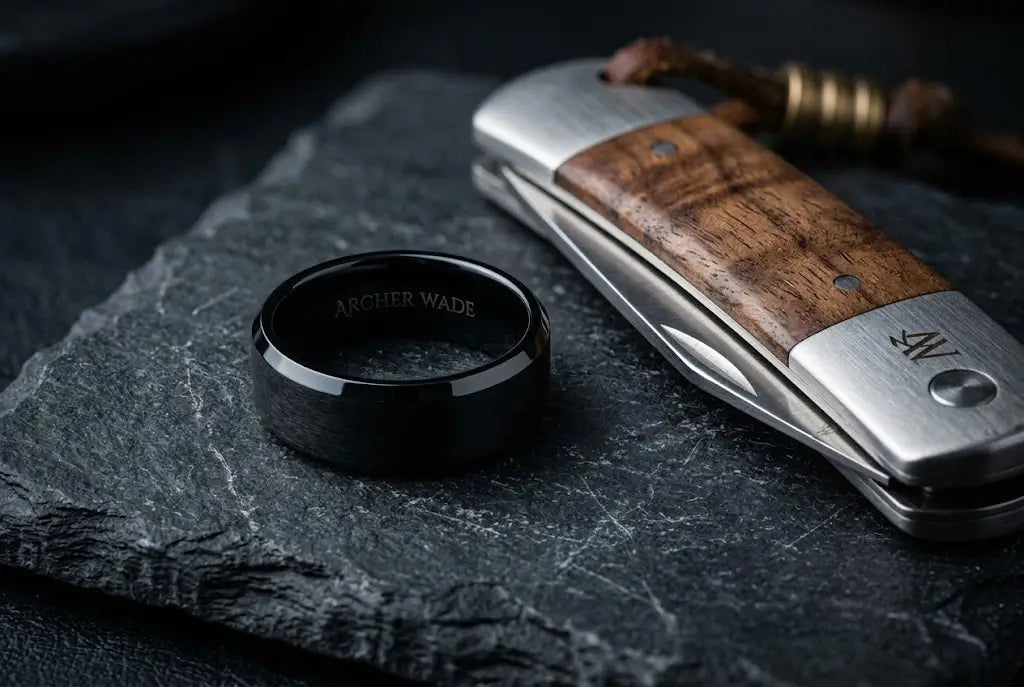
A men’s wedding band lives a harder life than most jewelry. It sees sweat, soap film, sunscreen, gym chalk, yard work, airports, and cold mornings that make your hands shrink. The good news is that most rings clean up well with a simple routine.
The key is matching the method to the material. A traditional gold band can handle a gentle soak. A rugged ring with wood, antler, or meteorite should not be submerged because those materials are more porous and can swell or dry out.
Below is a safe, material-by-material guide you can trust.
The universal safe method (start here)
For most solid metal bands, the safest “default” clean is:
-
Warm water + mild dish soap (pH-balanced)
-
A soft-bristled toothbrush for edges and grooves
-
Rinse well
-
Dry fully with a microfiber cloth or lint-free towel

This removes daily oils and residue without grinding grit into the finish. Skip harsh shortcuts like bleach, abrasive pastes, or random chemical dips—those can damage metal alloys and finishes.
What to avoid (quick hazard list)
-
Chlorine / bleach: can pit or weaken gold alloys and other jewelry metals.
-
Abrasive pastes (including “toothpaste hacks”): can scratch and haze softer metals and brushed finishes.
-
Acetone / harsh detergents: risky for coatings, resins, and inlays.
Constant hand sanitizer residue: can dull shine over time; if you use it a lot, rinse your ring occasionally and dry it.

Before you clean: identify what you’re wearing
Ask two questions:
-
Is it solid metal (gold, platinum, titanium, tungsten)?
-
Does it include inlays/coatings (wood, antler, meteorite, resin, black plating)?
If your ring has inlays, coatings, or any glued channel, treat it like a mixed-material product—not a plain metal band.
How to clean a men’s wedding band by material
Gold (yellow or rose)
Gold bands usually just need oil removal.
-
Use the universal method.
-
Gently brush around edges and any engraving. Use cotton swabs for tight details.
-
Dry fully, then light buffing with a microfiber cloth.
-
Avoid: bleach/chlorine exposure (pool/hot tub) and abrasive cleaners.
White gold (often rhodium-plated)
White gold commonly has a thin rhodium plating for a bright finish.
-
Use warm water + mild soap.
-
Keep pressure light.
-
Dry and buff gently.
-
If the color looks warmer or “less bright,” it may need re-plating, not harder scrubbing. (Heavy chemical exposure can shorten plating life.)
Platinum
Platinum cleans similarly to gold, but it can develop a soft “patina” with wear.
-
Use the universal method.
-
Dry well and buff lightly.
-
If you want a mirror finish again, that’s a professional polish choice—not a DIY abrasion job.
Sterling silver
Silver is more prone to tarnish (a surface reaction).
-
Use soap + warm water, then dry immediately.
-
A silver polishing cloth can help, but don’t overdo it.
-
Pro tip: If you wear your ring daily, quick wipe-downs reduce tarnish buildup.
Tungsten carbide
Tungsten is famously scratch-resistant, but it can chip or shatter from hard impacts on tile or stone.
-
Use the universal method.
-
Dry thoroughly.
-
Avoid: rough scrubbing that can haze certain finishes, chlorine/bleach exposure, and harsh cleaners.
Titanium
Titanium is low maintenance and handles daily wear well.
-
Warm water + mild dish soap.
-
Soft brush only if needed.
-
Dry and buff with microfiber.
-
If it’s brushed/matte: avoid abrasive pastes—those can create shiny “patches.”
Stainless steel / cobalt chrome
Both are generally durable for daily wear.
-
Soap + warm water, then rinse and dry.
-
Buff with microfiber.
-
If it has a mirror polish and you want extra shine, use a jewelry polishing cloth lightly.
Ceramic
Ceramic stays looking clean, but it’s more brittle than it looks.
-
Soap + water + microfiber dry.
-
Avoid: drops and sharp impacts.
Silicone
Silicone bands can trap oils and develop odor if moisture stays underneath.
-
Soap + warm water weekly.
-
Rinse well and dry fully before wearing again.
-
If you wear silicone for workouts, clean it often and let it air dry.

Wood, antler, and other porous inlays
This is where most ring damage happens—because people treat them like plain metal.
-
Do not soak. Porous materials can swell or dry out.
-
Wipe with a slightly damp microfiber cloth.
-
Dry immediately with a lint-free towel.

Meteorite / Damascus / mixed-material rings
Construction varies a lot (sealed vs exposed layers).
-
Keep it simple: damp cloth wipe, then dry fully.
-
Avoid: soaking and chemical cleaners unless the maker approves.
-
If you see discoloration, lifting inlays, or gaps, stop DIY cleaning and get it checked.
Are ultrasonic cleaners safe?
An ultrasonic cleaner can be useful for plain, solid metal jewelry—but it’s not universal. GIA notes that ultrasonic vibration can loosen gems or cause damage in certain settings.
For men’s bands, avoid ultrasonic cleaning if your ring has:
-
inlays (wood/antler/resin channels)
-
coatings/plating
-
cracks, chips, or loose components
When in doubt, stick to warm water + mild soap.
How often should you clean your ring?
A practical schedule:
-
Weekly: quick wash (soap + warm water)
-
Monthly: detail clean (soft brush + cotton swabs for engravings)
-
Every 6–12 months: professional check if you have stones, inlays, or a finish you want preserved
A quick hygiene note (real-world context)
Studies in healthcare settings show ring-wearing can be associated with higher hand organism counts in some conditions, while other research suggests a single plain ring may not increase bacterial load after proper scrubbing. The takeaway for everyday life is simple: clean the ring and keep the skin under it dry—especially after workouts or heavy sanitizer use.
People kept asking (FAQs)
Can I use toothpaste or baking soda to clean my wedding band?
I don’t recommend it. Abrasives can scratch metals and haze finishes.
Is chlorine really that bad for rings?
Yes. Chlorine/bleach can damage metal alloys and weaken jewelry over time. Take your ring off for pools, hot tubs, and bleach cleaning.
Can hand sanitizer damage my ring?
Alcohol-based sanitizers usually won’t “strip” your ring instantly, but residue can dull shine and repeated exposure can speed wear on some finishes (especially plated pieces). Rinse occasionally and dry well.
How do I clean engravings without scratching?
Use a cotton swab and mild soapy water. Don’t use metal picks.
Should I soak a tungsten or titanium ring?
A short soap-and-water soak is fine for plain bands. Skip soaking if there are inlays or coatings.
When should I see a jeweler instead of DIY cleaning?
If an inlay is lifting, a coating is wearing unevenly, a stone feels loose, or you see chips/cracks—get it inspected.

Final thought
Cleaning a men’s wedding band isn’t complicated, but it should be intentional. Use mild dish soap, warm water, and a soft brush for solid metals. Avoid bleach, abrasive pastes, and risky shortcuts. For wood, antler, meteorite, and mixed-material designs, keep it dry, gentle, and maker-approved.
That “real-world wear” mindset is exactly how we approach ownership at Archer Wade—helping you choose a band you can live in, and care for with confidence for the long run.