The engagement ring usually gets the spotlight. It is the surprise. It is the headline.
But the wedding band? That is the quiet workhorse. It is the piece of metal you will wear every single day for the rest of your life.
It takes the hits. It goes to the office, hits the trail, handles the tools, and grips the steering wheel. It needs to fit perfectly, hold up to your lifestyle, and look good doing it. It must be comfortable.
Because this is a piece of daily carry you will never leave behind, buying it should not be an afterthought.
The Quick Answer
When is the right time to buy your wedding bands? You should make your final purchase 3 to 4 months before your wedding day.
To hit that window with confidence, the sweet spot to start researching is 6 to 8 months out.
Waiting until the last minute leads to rush fees, limited options, and compromised choices. You do not want a ring you merely tolerate; you want one you respect. This guide breaks down the exact timeline, the current costs, and the practical factors you need to consider before pulling the trigger.
The Ideal Wedding Band Timeline (Month-by-Month)
Treat your wedding rings like any other crucial logistical step in your wedding planning. Getting ahead of the curve removes stress and gives you room to make the right choice.
Here is the month-by-month breakdown to keep you on track.
6–8 Months Out: Research and Inspiration
This is the time to gather intelligence. Start browsing styles and trying on different metals. Do not rush this part.
For the bride, this means figuring out what pairs well with her engagement ring. Does she need a contoured band for a flush fit? Does she want matching pavé diamonds? Understanding how the set will sit is crucial.
For the groom, this is about feeling the weight of different materials. You need to know the difference between the heavy, premium feel of platinum and the lightweight, rugged nature of titanium. Custom designs require this early start, as specialized jewelers need time to source unique materials and draft precise designs.
4–5 Months Out: Making the Purchase
This is the moment to make your final decision and place the order.
Buying early avoids rush fees and protects you against shipping delays. This is especially true if you are ordering during peak wedding season (spring/summer) or around major holidays. Lock in the purchase now, so production can begin without the pressure of a ticking clock.
2–3 Months Out: Fittings and Engravings
Once the rings arrive, you need time for a test fit.
Fingers change size. They swell in the heat and shrink in the cold. Pre-wedding stress and fitness routines can also alter your ring size (often up to 1/2 to 1 full size). This two-to-three-month buffer ensures you have plenty of time to send the ring back for resizing if the fit is not dead-on.
This is also the window to have the rings engraved. Adding a date, a coordinate, or a short message takes a week or two. Do not rush this step.
1 Month Out: Safe Storage
With four weeks to go, your rings should be in hand, perfectly sized, and safely stored away.
Keep them in their original packaging in a secure spot. This is also the time to add the rings to your insurance policy. Once that is done, you can check this massive task off your list and focus on the day itself.
How Much Do Wedding Bands Cost? (Updated 2026 Data)
Money talks, and it pays to be transparent. While the engagement ring often takes up a massive chunk of the budget, wedding bands are typically more approachable. However, the costs vary wildly based on the materials and the craftsmanship.
Based on recent industry data from sources like The Knot and WeddingWire for the 2025/2026 period, most couples spend a combined average of $1,000 to $1,500 for both wedding bands. While many custom or high-end options can range much higher, this reflects the standard.
Women’s Bands
The average cost for a woman's wedding band sits between $800 and $1,200.
Why the higher price tag? Women's bands often feature diamond accents. Whether it is a full eternity band, channel-set stones, or intricate milgrain detailing, the added labor and precious stones drive the price up. These rings are usually designed to complement the engagement ring, requiring precise craftsmanship.
Men’s Bands
The average cost for a man's wedding band ranges from $400 to $700.
Men’s rings typically focus on durable metals rather than gemstones. A classic 14k gold band or a rugged tungsten ring keeps the cost lower. However, if you upgrade to dense, premium metals like platinum (which is heavier and harder to work with than gold) or tantalum, or add custom wood and meteorite inlays, that price will climb.

Off-the-Shelf vs. Custom Bands: The Timeline Impact
Your timeline will shift dramatically depending on how your rings are made. You need to know exactly what you are ordering to avoid coming up short on the big day.
Ready-Made (Off-the-Shelf)
-
Timeline: 1 to 3 weeks.
-
Best for: Classic, unadorned metal bands and standard profiles.
If you are buying a standard width, traditional metal ring that is already in stock, the process is fast. The only delay will be basic sizing and standard shipping. If you are a straightforward guy looking for a clean, classic band, this is your route.
Custom-Designed
-
Timeline: 6 to 10 weeks (plus initial design consultations).
-
Best for: Unique fits, heirloom stones, and highly personalized designs.
Custom means built from the ground up. If a bride has a uniquely shaped engagement ring, she will need a custom-curved band to prevent the two rings from rubbing together and causing damage (a common issue with mismatching hardness, according to GIA guidelines). For men, custom might mean sourcing a specific material or creating a bespoke texture. Craftsmanship takes time. Respect the process and give the jeweler the weeks they need.
Key Factors for the Long Haul (Expertise & Daily Wear)
A wedding band is not a museum piece. It is a daily companion. Choosing the right ring is about matching the material to your actual life.
Metal Matching and Hardness
Metals have different hardness levels. If you wear two rings next to each other, they need to play nice.
If a bride pairs a 14k gold wedding band with a platinum engagement ring, the harder platinum will slowly scratch and wear down the softer gold ( platinum being significantly harder, according to Vickers hardness tests). It is usually best to match the metals.
Lifestyle, Sweat, and Scratches
Be honest about what you do with your hands.
If you grip barbells, work with heavy machinery, or spend your weekends on the trail, a polished gold ring will show heavy scratches within a week. That is not a defect; it is just the nature of gold.
If you want a ring that resists the elements, look into industrial metals. Tungsten is incredibly scratch-resistant but can shatter if dropped on concrete. Titanium is highly durable and incredibly light. Pick a material that fits your routine, not just one that looks good in the display case.

Warranties and Return Policies
This is a high-stakes purchase. Always verify the jeweler’s return window and exchange policies.
Look for lifetime maintenance. Does the jeweler offer free prong tightening? Will they re-polish the metal when it gets scuffed? A reputable brand stands by its product long after the wedding is over.
Lessons Learned from Real Wearers
Experience is the best teacher. Here is what real couples have learned from the process.
The Rush Fee Reality: "We waited until four weeks before our wedding to order my tungsten band. It arrived, but it was half a size too small. Because we didn't have a buffer, we had to pay a massive premium to rush a new size overnight just days before the ceremony. Stress we didn't need." – Mark, 32
The Custom Curveball: "I thought I could just buy a standard gold band. But when I tried it on next to my oval engagement ring, there was a huge, awkward gap. I had to pivot to a custom contoured band. Because we started shopping six months out, the jeweler had plenty of time to build it. Start early." – Sarah, 29
People Also Ask (Conversational FAQs)
Do we have to buy our wedding bands from the same jeweler as the engagement ring?
No. Shopping around is fine. However, sticking with the same jeweler guarantees a flush fit for her engagement ring and often unlocks a 10–20% returning client discount.
Who pays for the wedding bands?
Traditionally, you buy each other’s rings as a gift. Today, about 70% of couples simply bundle the rings into their joint wedding budget. There are no rules—do what works for your finances.
Is it cheaper to buy wedding bands as a bridal set?
Yes. Buying the engagement ring and wedding band together usually saves you 15–25% and ensures the metals and designs match perfectly.
Can my finger size change before the wedding?
Absolutely. Heat, cold, stress, and workouts change your finger size daily. Measure multiple times, at different times of the day, to find your true average before ordering.

The Archer Wade Standard: Buy with Confidence
At the end of the day, your wedding band is a reflection of your commitment and your personal standard. It should not be an afterthought, and it certainly should not be rushed.
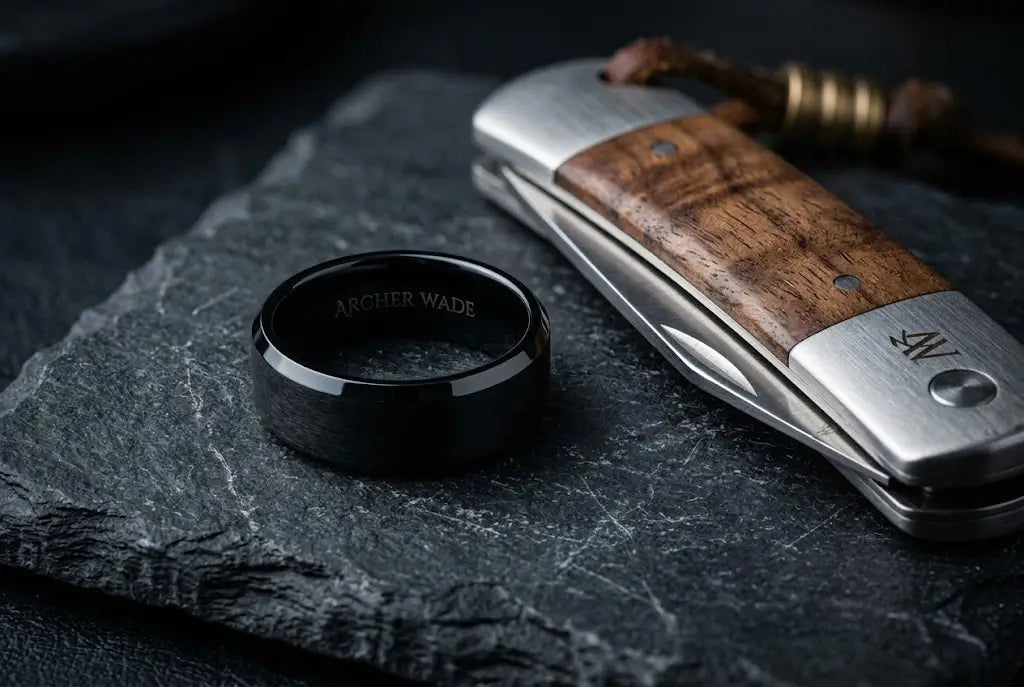
At Archer Wade, we believe in purpose-built craftsmanship. We design men’s wedding bands that respect the reality of daily wear. We know that your ring is going to face sweat, dirt, tools, and travel. That is why we focus on premium materials (like the rugged tantalum seen in our durability shot), clean minimalist designs, and uncompromising durability.
We cut the fluff and focus on what matters: a comfortable fit, a rugged aesthetic, and a ring that builds character the longer you wear it.
Start your search early. Do your research. And when you are ready to choose a ring that works as hard as you do, we are here to help you get the sizing dead-on and the details right.
Take the next step. Explore the materials that fit your lifestyle, and read our sizing guide to ensure a perfect fit from day one.