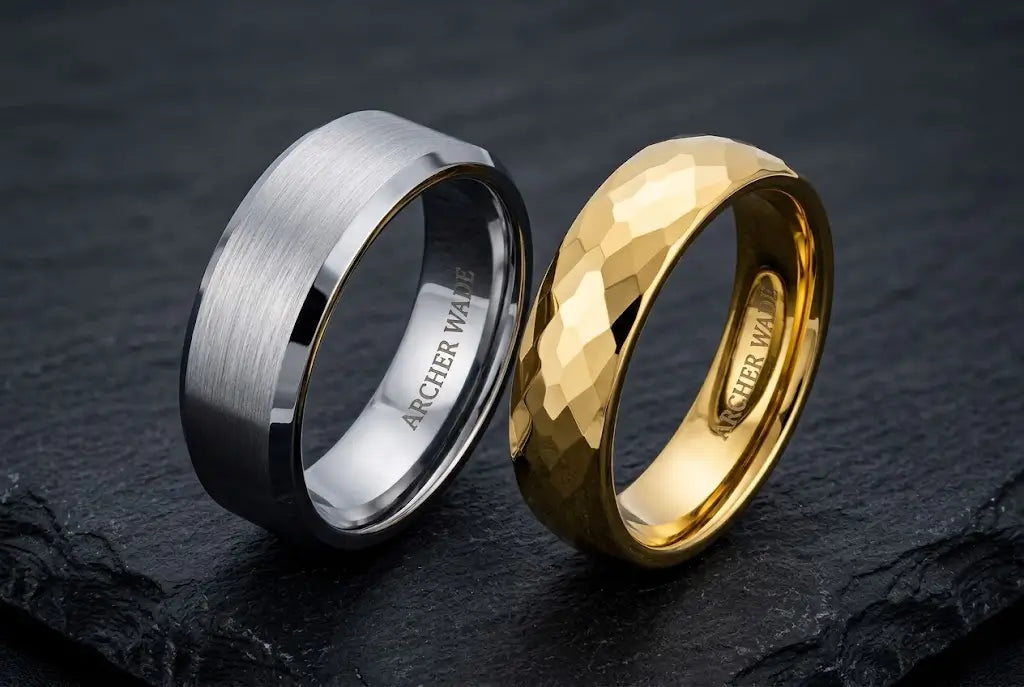
A wedding band is one of the few objects a man wears every day for the rest of his life. It will be on his hand for every meeting, every drive, every meal, every photograph he's in for the next forty years. Most rings are not designed with that in mind. They're designed for the wedding day.
This is the case for the modern heirloom wedding band as a piece of menswear — built with the same restraint you'd want from a good watch, a good shoe, a good suit. Designed to look right in five years, in twenty, in fifty. Designed to be handed down.
What a Modern Heirloom Wedding Band Actually Is
"Heirloom" gets used loosely. In men's jewelry it usually means one of two things — either an antique reproduction (signet rings, Victorian-revival bands) or a marketing flourish slapped onto whatever the brand happens to sell.
The modern heirloom is something different. It's not a period piece. It's not nostalgia. It's the recognition that the best objects in a man's life — a leather wallet that softens with use, a watch that's been on his wrist since his thirties, a chef's knife that gets sharper with care — earn their place by lasting. They don't get replaced every two years. They get worn in.
A wedding band built on that thinking has three properties. It uses materials that age well. It avoids design choices that will date it. And it's built to outlast the moment it was bought for. Everything else is decoration.
A Timeless Men's Wedding Band Is Designed for the Next Forty Years
Trends in men's jewelry move slowly, but they move. The chunky stacked rings of the early 2010s look dated now. The all-black tactical aesthetic that was everywhere five years ago is already softening. The brushed-finish minimalism that defines a lot of what we make today will look different in a decade — but it won't look wrong.
Three design choices keep a ring on the right side of that line. Balanced proportions — width, profile, and finish chosen to read clean on the hand at any angle. Restrained finishes — brushed, satin, or polished, the same options menswear has used for a century. Real materials — chosen for character, not novelty.
These aren't aesthetic preferences. They're structural decisions about whether the ring will survive the next twenty years of changing taste.

Materials That Age the Way You Want Them To
Tungsten carbide is the modern heirloom material. It's one of the hardest metals used in jewelry — harder than titanium, harder than steel, four times harder than gold. It holds its finish through decades of daily wear. It doesn't bend, scratch, or warp on a job site, in a kitchen, or under a steering wheel.
Comfort-fit interiors matter for the same reason. A standard-fit band sits flat against the finger. A comfort-fit band has a beveled inside edge — a small change that turns a ring you take off at night into a ring you forget you're wearing. For a band you'll wear for forty years, that difference compounds.
The materials we work into our rings — wood inlays, real meteorite, blackened tungsten — are chosen because they've already been around for a long time. Wood ages. Meteorite is older than the planet. These aren't novelties. They're materials with a track record — the kind of materials a men's wedding band to pass down has to be built from.
Why a Men's Wedding Band to Pass Down Can't Be a Novelty
There's a corner of the men's wedding band market that has decided men want their rings to look like merchandise. Superhero logos. Whiskey-barrel inlays cross-promoted with brands. Dinosaur bone. Sports team licensing.
There's nothing wrong with novelty rings. Some men want them. But novelty has an expiration date built into it. The Star Wars ring you buy in your thirties is not the ring you'll want to be wearing in your sixties. The marketing tie-in dates faster than the metal.
Modern heirloom is the opposite philosophy. The ring shouldn't be a moment. It should be the part of your life that survives the moments.
The Collection — Built Around Three Kinds of Men
Twelve rings. Three character types. Every band is 8mm, comfort-fit, tungsten carbide, lifetime-warrantied, and designed in the USA. Within that, the collection sorts naturally into three lanes.
The Modern Gentleman
Clean lines, balanced proportions, finishes that hold their own next to a good watch. The Heritage Band is the canonical version — brushed silver tungsten, classic profile, the band you'd choose if you were only choosing one. The Sentinel Band sits next to it: solid, dependable, the band that doesn't need to announce itself. The Axis Band leans into comfort-first, the band you forget you're wearing.
The Refined Adventurer
For men who'd rather be outside. Materials that pick up character with use. The Trailhead Band pairs brushed silver tungsten with a wood inlay that ages with you. The Ridge Band is built for the hand that does the work — tough, scratch-resistant, blue-collar honest. The Timberline Band combines black tungsten with wood, equal parts trail and table. The Quarry Band is the rugged premium choice — black tungsten plus real meteorite.
The Legacy Builder
Distinctive details, premium materials, designed to be the ring his son might wear someday. The Summit Band is silver tungsten with a band of crushed meteorite — material from somewhere older than the planet. The Forge Band carries similar character with its own profile. The Meridian Band uses rose gold tungsten in a deep copper-gold tone — warm, distinctive, quietly different. The Ember Band takes a similar approach with gold-look tungsten. The Nightfall Band closes the lane in dark tungsten with a quiet, moody finish.

How to Choose an Heirloom Wedding Ring for Men You'll Still Want in Twenty Years
If you're buying a band you intend to wear for the rest of your life, three questions matter more than any spec sheet.
What hand will you be in twenty years from now? Not just career — temperament. The man who'll be wearing this ring at 55 is more confident than the man at 30, more grounded than the man at 25. He doesn't need the ring to do work the rest of his hand is already doing. He wants something that holds its own, not something that competes.
What does the ring need to survive? Hands-on work, kids, gym, kitchen, travel. The honest answer is usually "more than I think." Tungsten carbide is built for that — comfortable enough to forget, durable enough to take the day-in-day-out wear without losing its finish.
Will it still feel like you in twenty years? This is the hardest one to test in the moment. The shortcut: look at the ring next to a watch you've owned for ten years, a wallet you've used until the leather gave out, a knife or a tool you've kept around because it just works. If the ring belongs in that company, it'll belong on your hand.

Heirloom Quality Without the Heirloom Markup
The conventional men's wedding band industry runs at a 4–6x markup over construction cost. A $1,200 band at a traditional jeweler costs $200–$300 to make. The rest is retail rent, sales staff, advertising, and the assumption that you won't price-check it.
Archer Wade prices between $149 and $199. Same-tier construction. Same materials. Same comfort-fit, same lifetime warranty, same designed-in-USA build. The price reflects what the ring should cost without the markup, not what the ring is worth.
Every ring ships free, in the green Archer Wade box, with a serial-numbered warranty card. The warranty card has a blank line at the bottom — for the day, decades from now, when the ring gets passed to whoever wears it next.
When You're Ready
Order a free ring sizer if you're not sure of your size — tungsten can't be resized, so accurate sizing matters more here than it does for gold. Pick the lane that fits — Modern Gentleman, Refined Adventurer, Legacy Builder. Choose the ring.
Or read more first. We've written longer pieces on tungsten versus gold, on how to size a ring at home, on why heirloom quality matters more than the day you bought it. Those are linked below.
Frequently Asked Questions
What is a modern heirloom wedding band?
A modern heirloom wedding band is a men's ring designed to be worn for decades and passed down — built with restraint, durable materials, and design choices that won't date. It's not an antique reproduction or a trend piece. It's a ring made the way menswear used to be made: with the assumption that this object will outlive the moment you bought it.
Why tungsten carbide for an heirloom ring?
Tungsten carbide is one of the hardest metals used in jewelry. It holds its finish through decades of daily wear, doesn't bend or warp, and is highly scratch-resistant. For a ring intended to look right in twenty or forty years, those properties matter more than they do for a ring you might upgrade in five.
Can a tungsten wedding band be passed down?
Yes — and it's one of the more practical metals to pass down because it doesn't soften, lose definition, or pick up the kind of wear that gold and platinum do. The catch: tungsten can't be resized. If the ring is being passed to someone with a different finger size, they'll need a replacement of the same design rather than a resize. Archer Wade's lifetime warranty handles same-design replacements at the warranty rate.
How do I choose between brushed, satin, and polished?
Brushed reads quietest — the most common menswear choice. Satin sits between brushed and polished, with a soft sheen. Polished is the most reflective and the closest to traditional gold-band aesthetics. For an heirloom build, brushed and satin age more gracefully because micro-scratches blend into the finish. Polished shows wear more visibly — which some men prefer and some don't.
Is $149–$199 too low for a real heirloom-quality ring?
It's the price the construction actually costs without traditional retail markup. Most men's wedding bands at jewelers run $600–$2,000 for the same tungsten construction we use. The price difference reflects the cut-out middlemen, not the build.
What makes a timeless men's wedding band different from a fashion ring?
A timeless men's wedding band is designed against trends, not toward them. The proportions, finish, and profile are the ones menswear has used for decades — restrained, balanced, recognizable in any era. A fashion ring is designed to look distinctly of its moment, which is why the men's wedding bands that survive forty years tend to look almost interchangeable across eras, while fashion rings from the 1980s look unmistakably 1980s.
What's the difference between Archer Wade and other tungsten ring brands?
The category is dominated by two postures: novelty (superhero, sports, whiskey-barrel collabs) and budget (commodity tungsten at $20–$80). Archer Wade is built around a third — modern heirloom. Restraint over flash. Materials chosen for how they age. Design language that reads as menswear, not jewelry. Same construction quality as $600–$1,200 jeweler bands at $149–$199.