You made the commitment. You have the ring. Now, you are figuring out exactly how it fits into the reality of your daily routine.
For most men, a wedding band is designed to be put on and forgotten. It becomes a permanent fixture, an extension of your everyday carry. Taking it off feels counterintuitive. Frankly, it is also incredibly easy to misplace when you do take it off. So, when you step into the bathroom each morning to get ready for the day ahead, a very practical question arises. It is one of the most frequent questions we hear: can you shower with wedding band metals without ruining them?
Let us clear the air immediately with some practical reality. Forgetting to take your ring off once in a while is not a disaster. Most jewelry-grade metals can easily survive an occasional wash. The issue is not instant destruction.
However, making it a daily habit is strongly advised against. Routine exposure to body washes, exfoliating scrubs, and hard water leads to a dulling, stubborn buildup. More importantly, the combination of cold water and slippery soap significantly increases the risk of your ring slipping off your finger and vanishing down the drain.
In this guide, we will break down the mechanics of what happens in the shower, how different materials react over time, and the practical, real-world steps you should take to protect your investment.
The Physics of the Shower: Slippage and Scum
Understanding why you should take your ring off requires looking past the metal itself. You have to consider the actual environment of a typical shower. It is a daily mix of rapid temperature shifts, chemical agents, and physical friction.
When men research the phrase "can you shower with wedding band," they usually only think about water rust. The real threats are much more subtle and structural.
The Slip and Drain Hazard
Your fingers are not static. They expand and contract based on temperature, hydration levels, and blood flow. When you step into a shower, especially if the water is cooler than your core body temperature, the blood vessels in your extremities constrict to preserve core body heat. This natural biological reaction is called vasoconstriction. As a result, your fingers temporarily shrink.
Add shampoo, conditioner, or body wash to that equation, and you have just introduced a high-grade lubricant. A ring that fits perfectly when your hands are dry and warm can suddenly become incredibly loose. It only takes one swift motion of washing your hair or reaching for a towel for the ring to slide over your knuckle and drop straight into the plumbing.

Soap Scum and Trapped Moisture
Body washes and bar soaps contain heavy fats, oils, and moisturizers. While these are engineered to be great for your skin, they leave residues that are terrible for the finish of your ring.
Every time you lather up, microscopic layers of soap scum adhere to the metal. If your ring features grooves, inlays, or a premium brushed finish, this residue gets tightly packed into the textured areas. Over time, this buildup hardens. It turns a sharp, clean finish into a dull, cloudy band.
Furthermore, moisture and soap trapped beneath the metal create a micro-climate against your skin. Water sits against the skin, breaking down the outer protective layer and causing severe, red irritation beneath the ring. This is often mistakenly referred to as a "wedding ring allergy," but it is usually just trapped shower moisture causing contact dermatitis.
Chemical and Abrasive Wear
Many modern shower products contain chemical exfoliants or physical abrasives like pumice or microbeads. Think of these compounds like liquid sandpaper.
Precious metals are inherently relatively soft. When you scrub your body, you are actively grinding those abrasives against the surface of your ring. This accelerates the formation of micro-scratches and rapidly wears away the polished or brushed finish you initially chose.
How Different Materials React to Daily Showers
Not all rings are forged equal. The specific material on your finger dictates exactly how much wear and tear a daily shower will cause. When evaluating if can you shower with wedding band types of different metals, you have to know exactly what you are wearing.
Solid Gold (Yellow and Rose Gold)
A solid gold ring will not rust in the shower. However, pure gold is far too soft for daily wear, so it is alloyed with other metals like copper, silver, or zinc to give it structural strength. Frequent exposure to the harsh chemicals found in some shampoos can slowly react with these base alloys over the years. More importantly, gold scratches easily. The exfoliating body washes you use will dull its shine rapidly.
White Gold
White Gold requires a specific, stringent warning. To achieve that bright, silvery-white look, a white gold ring is plated with a thin layer of rhodium. Rhodium is durable, but the daily moisture, chemicals in shower gels, and the friction of washing will strip this plating away much faster than standard, dry daily wear. When the rhodium wears off, the natural, yellowish-gray alloy underneath is exposed, forcing you to pay for replating sooner than necessary.
Platinum
Platinum is an incredibly dense, premium metal. It does not tarnish and will not lose its metal volume when scratched. Instead, the metal simply displaces, creating a frosted, worn look known in the jewelry industry as a "patina." While highly resilient to water, the daily grinding of soap scum and shower abrasives will artificially accelerate this patina.

Tungsten Carbide and Titanium
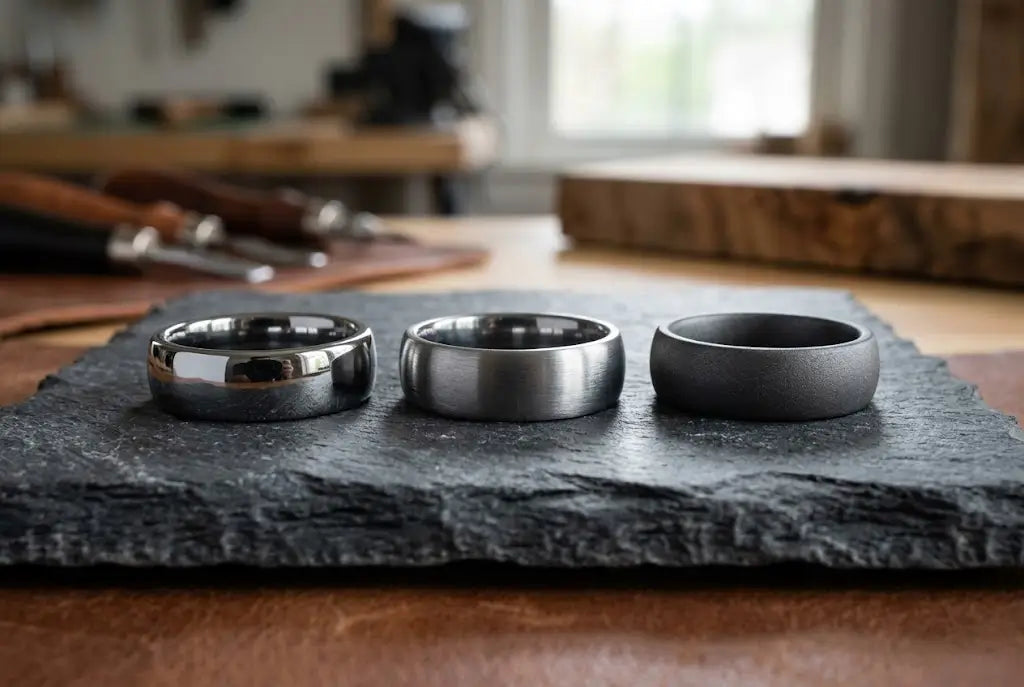
These are the heavy hitters of men's bands. Tungsten and titanium are exceptionally tough, scratch-resistant, and largely inert. Shower water will not rust or degrade jewelry-grade versions of these metals. However, because these metals often feature intricate brushed finishes, beveled edges, or dark ion-plated coatings, they are absolute magnets for soap scum. The ring will not break, but it will look perpetually dirty if worn in the shower daily.
Silicone Rings
Silicone rings are practically indestructible in water. They are built for the gym, the trail, and the shower. However, because silicone is entirely non-porous, it is notorious for trapping moisture against the skin. If you wear a silicone ring in the shower, you still must take it off afterward to completely dry your finger and the inside of the ring to prevent bacterial growth and skin rot.
The Hard Truth: The Reality of Ring Loss
It is easy to look at your hands and think, "I am careful, I will not lose my ring." But the data paints a very different, uncompromising picture of ownership.
A comprehensive survey conducted by BriteCo, a major jewelry insurance provider, highlighted just how common loss and damage are in the real world. The numbers are sobering for any man who insists on wearing his ring twenty-four hours a day.
The study found that a staggering 69% of people indicated they have either lost a piece of jewelry, had a piece break, or both. Daily wear-and-tear is the primary culprit. Furthermore, among insured engagement and wedding ring buyers, nearly two out of three (59%) actually made a claim for a lost or damaged ring within a 10-year period.
Finally, 41% of people admit to misplacing their valuables either every day or sometimes.
The takeaway here is grounded strictly in statistics. Relying on sheer willpower or "being careful" in a slippery, wet environment like a shower is a mathematical gamble. Establishing a reliable habit of removing your ring is the only proven way to protect it from the drain.
Other Times You Should Remove Your Ring
If you are successfully building the habit of taking your ring off before you turn on the shower faucet, there are three other distinct scenarios where you should absolutely leave the band behind.
At the Gym
Lifting heavy weights with a metal ring is dangerous for both your hand and the ring itself. The sharp steel knurling on barbells acts like a metal file, chewing up gold and platinum. Under heavy loads, softer metals can even bend entirely out of round. More importantly, ring avulsion—a severe, permanent injury where the ring gets caught and violently pulls the skin—is a real risk when working with heavy machinery.

In the Pool or Ocean
Chlorine is a harsh, stripping chemical that attacks the base alloys in gold rings, causing them to become brittle and eventually crack over time. Saltwater is highly corrosive to non-precious metals. Additionally, the cold water of a pool or ocean shrinks your fingers just like a cold shower, making it incredibly easy to lose your ring in deep water where you will never find it.
Working With Tools
If you are wrenching on a truck engine, doing heavy yard work, or using power tools, take the metal ring off. Grit, engine oil, and direct heavy impacts will deeply scar the metal, moving it past a natural, acceptable patina and into the territory of actual, irreversible damage.
The Archer Wade Standard: Proper Storage and Care
At Archer Wade, we believe a men's ring should look like it belongs to a man who works, travels, and lives fully. A few scratches add character and tell a story. But there is a massive difference between earning a natural patina and accelerating neglect.
Here is how to properly manage your ring for the long haul.
Use Dedicated EDC Storage
The absolute number one reason men lose their rings is because they set them down in random, changing places. Eliminate that variable entirely. Place a dedicated everyday carry (EDC) tray or a small, heavy ring dish in strategic spots: one on your bathroom vanity, one on your nightstand, and perhaps one near the kitchen sink. When the ring comes off, it only goes into one of these designated homes. Never the counter. Never your pocket.
The Simple Cleaning Routine
You do not need harsh chemicals or an expensive ultrasonic cleaner to maintain your ring. Once a month, or whenever the ring looks cloudy from daily wear, follow this simple, trusted process:
-
Fill a small bowl with warm water and two drops of mild, grease-cutting dish soap.
-
Let the ring soak for ten to fifteen minutes to loosen body oils and dirt.
-
Take a soft-bristled baby toothbrush and gently scrub the ring, paying close attention to any interior engravings or exterior grooves.
-
Rinse under warm water (ensure the sink drain is fully closed first).
-
Dry thoroughly with a clean, lint-free microfiber cloth.
Conversational FAQs
Can you shower with wedding band materials safely if you only use natural soap?
Even natural, organic soaps contain oils and fats that leave a residue. While natural soaps are free from harsh chemical exfoliants that might scratch the metal, they will still cause a cloudy soap scum buildup on your ring over time. The risk of the ring slipping off in the water remains exactly the same.
Will hard water ruin my ring over time?
Hard water will not chemically destroy a premium ring, but it contains high levels of calcium and magnesium. When the shower water evaporates, it leaves these minerals behind as hard, crusty white deposits. Over time, this buildup makes the metal look incredibly dull and often requires professional cleaning to safely remove without scratching the band.
What actually happens if I never take my ring off?
If you never take your ring off, dirt, sweat, and dead skin cells will tightly accumulate beneath the metal. This creates a literal breeding ground for bacteria, leading to foul odors and raw skin irritation. The constant friction of the trapped debris will also prematurely wear down the inside comfort-fit of the ring.
The Bottom Line
Your ring is an investment and a profound symbol. It deserves a basic, uncompromising level of respect. Let's be clear: an occasional wash will not destroy your hardware. But while stepping into the shower with it occasionally will not trigger an immediate disaster, the daily accumulation of soap, the abrasive nature of shower gels, and the undeniable physical risk of the drain make it a universally poor habit.
At Archer Wade, we build men's rings designed for reality. We focus heavily on premium materials, comfort-fit engineering, and a rugged durability that handles the grit of everyday life. We want your ring to tell your story for decades to come. The easiest, most effective way to ensure it lasts that long is to simply take it off before you turn on the water.
Put it in a safe EDC tray, get clean, and put it back on when you are ready to tackle the day. It is a small, easy habit that guarantees your ring stays exactly where it belongs.